
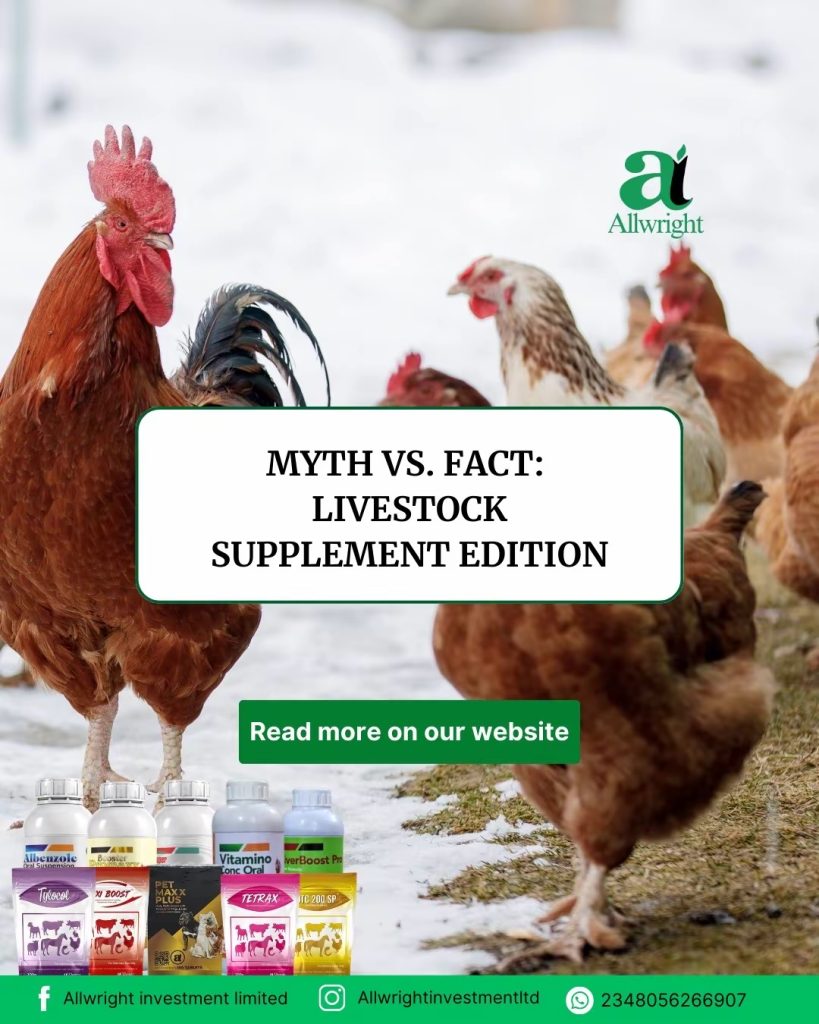
Myth vs. Fact: Livestock Supplement Edition
Separating fact from fiction is crucial when making decisions about your livestock’s nutrition. Believing common myths can lead to wasted money, poor herd health, and missed performance targets. Let’s debunk the top five misconceptions with science-backed facts.
Myth #1: “If a little is good, a lot must be better.”
· The Myth: This “more is better” thinking suggests that doubling a supplement dose will double the benefits.
· The Fact: More is not better; it’s often toxic. Livestock have precise nutritional requirements. Oversupplementation can cause serious health issues, metabolic imbalances, and even death.
· The Science: Minerals like selenium and copper have a very narrow safe range. For example, the requirement for selenium is about 0.1-0.3 mg/kg of diet, but toxicity can occur at levels as low as 2 mg/kg. Oversupplementing fat-soluble vitamins (A, D, E, K) can lead to dangerous buildups in the liver.
Myth #2: “All supplements are basically the same.”
· The Myth: A mineral is a mineral, so the cheapest bag on the shelf is just as good as a premium, pharmaceutical-grade product.
· The Fact: Bioavailability is everything. The form of the nutrient dictates how much an animal can actually absorb and use.
· The Science: Compare zinc oxide (a common, cheap form) to zinc methionine (a premium, chelated form). Zinc methionine can be 2-3 times more bioavailable, meaning the animal absorbs far more of it. You may pay less per pound for the oxide, but you’re paying for nutrients that mostly pass through the animal undigested.
Myth #3: “My animals will eat what they need if I offer it free-choice.”
· The Myth: Livestock have a perfect natural instinct to self-regulate their mineral and vitamin intake from a free-choice feeder.
· The Fact: Intake is driven primarily by palatability and salt content, not by a conscious knowledge of deficiencies. Animals often over- or under-consume based on taste.
· The Science: If a mineral mix is highly palatable (often due to high salt or molasses), they may overeat it while seeking salt, wasting product and risking imbalances. If it’s unpalatable, they’ll avoid it entirely, regardless of their physiological need. Proper intake management is the farmer’s responsibility.
Myth #4: “I only need to supplement when I see a problem.”
· The Myth: Supplements are a treatment to be used reactively when animals show signs of deficiency or illness.
· The Fact: Supplements are most effective as a preventive tool. By the time clinical signs (like poor coat, weak newborns, or reduced milk yield) appear, productivity and health have already been compromised for weeks or months.
· The Science: Building up liver stores of key vitamins and minerals takes time. Strategic supplementation, especially during critical periods like the transition phase for dairy cows, prepares the animal for challenges and prevents problems before they start, ensuring optimal performance.
Myth #5: “Natural’ or ‘herbal’ supplements are always safe and effective.”
· The Myth: Anything labeled “natural” is inherently safer and gentler than a scientifically formulated supplement.
· The Fact: “Natural” does not equal “safe” or “effective.” Plant compounds can be toxic in incorrect doses, interact with medications, and lack consistent potency. Their effects are often not backed by the same rigorous research as pharmaceutical-grade ingredients.
· The Science: Some herbs can cause liver damage or interfere with blood clotting. Unlike pharmaceutical products, herbal supplements are not required to prove purity, potency, or efficacy before sale, leading to significant variability between batches and brands.
The Takeaway: Trust the Science, Not the Folklore
The foundation of effective herd nutrition is precision, not guesswork. Investing in high-quality, research-backed supplements and implementing them through a strategic, preventive plan designed with a nutritionist is the surest path to better herd health, improved productivity, and a stronger bottom line.
Leave a comment
You must be logged in to post a comment.