
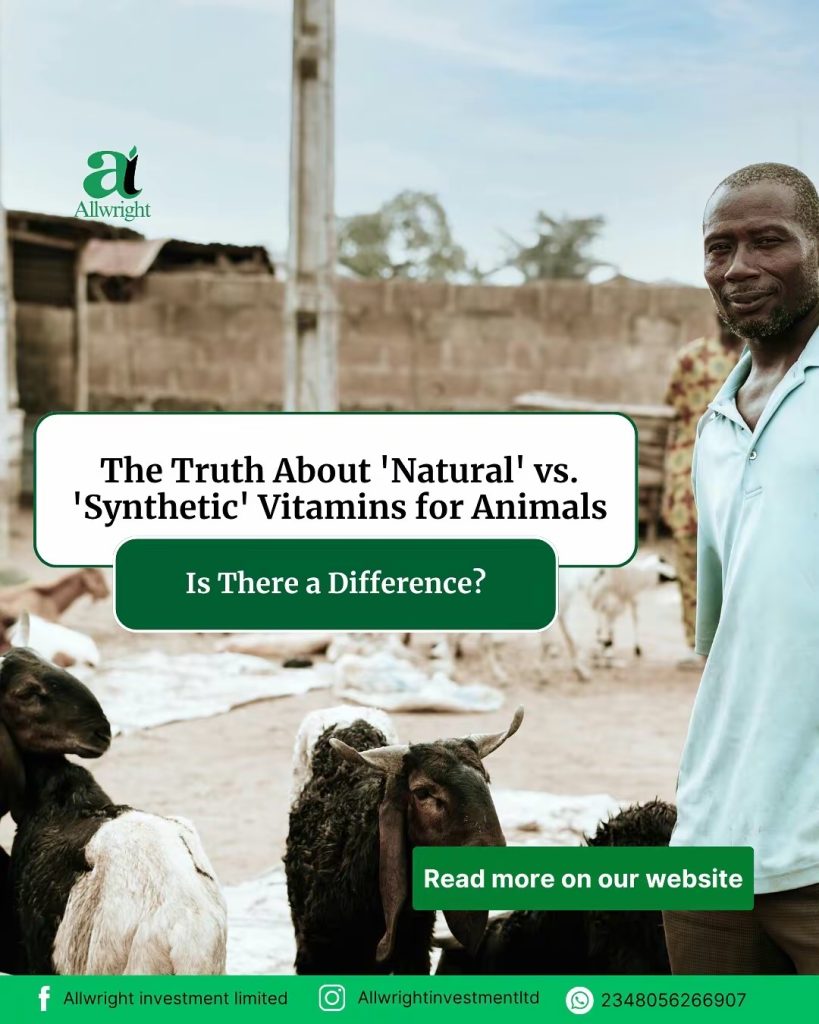
Natural vs. Synthetic Supplements: Which Is Better for Your Animals?
As a livestock producer, you’ve likely stood in the feed room staring at two supplement options—one labeled “natural” at a premium price, the other synthetic and budget-friendly. The question is: Does natural actually mean better?
The short answer is nuanced: For some nutrients, natural forms are significantly more bioavailable. For others, synthetic versions work perfectly well—or even better. The key is understanding which is which.
Vitamin E: A Clear Case for Natural
When it comes to vitamin E, the science is definitive: cows strongly favor the natural form.
Here’s why: Synthetic vitamin E (chemically named all-rac-α-tocopherol acetate) is actually a mixture of eight different molecular forms—but only one of them (RRR-α-tocopherol) is the natural form the animal’s body recognizes .
Think of it like a hand fitting into a glove. The natural form is the “right hand” that fits perfectly. The synthetic version contains seven “wrong hands” that the body struggles to use .
The Numbers Tell the Story
Research from Aarhus University demonstrated this dramatically: When cows received an injection of synthetic vitamin E:
· 16.3% of the natural form was secreted into milk
· 6.5% of the synthetic “dextrorotatory” forms made it through
· Only 0.7% of the synthetic “laevorotatory” forms appeared in milk
Bottom line: Natural vitamin E is over 2.5 times more effective at enriching milk than the best-performing synthetic forms.
For dairy farmers aiming to produce high-vitamin milk, this matters immensely. Feeding fresh grass or grass silage (rich in natural vitamin E) delivers far more vitamin to the milk than adding synthetic vitamin E to the ration .
Trace Minerals: Organic (Chelated) vs. Inorganic
For minerals like zinc, copper, and manganese, the comparison isn’t “natural vs. synthetic” but rather organic (chelated) vs. inorganic forms.
The Absorption Problem with Inorganic Minerals
Traditional inorganic minerals (oxides, sulfates) have a major drawback: they dissolve too quickly in the rumen. This can:
· Harm beneficial rumen microbes
· Reduce fiber digestion
· Pass through the animal largely unabsorbed
In fact, bioavailability of inorganic trace minerals is so low that producers often supplement at 2-3 times recommended levels just to ensure adequate intake .
The Chelated Advantage
Advanced chelated minerals (where minerals are bound to organic acids or amino acids) work differently. They remain stable at rumen pH (around 5-6) but become highly soluble at the acidic pH of the abomasum (around 2)—releasing minerals exactly where absorption occurs .
Research in sheep showed that 100% chelated mineral supplementation:
· Improved digestibility of dry matter, organic matter, and fiber
· Enhanced mineral absorption compared to inorganic sources
· Maintained rumen health while delivering more nutrients to the animal
Real-World Results in Swine
A study on chelated minerals in sows found dramatic improvements:
· 9-17% reduction in gilt and sow mortality
· 20-35% lower culling rates
· 5-10% higher retention rates through third parity
However, the researchers note an important caveat: not all organic minerals perform equally well—quality and manufacturing matter tremendously .
Plant-Based Alternatives: Promising but Variable
Phytogenic feed additives (PFAs)—plant-derived compounds from herbs, spices, and essential oils—are gaining traction as natural alternatives to synthetic antioxidant vitamins .
What the Research Shows
A systematic review of 44 poultry studies found that PFAs can positively affect:
· Oxidative stability of meat during storage
· Fatty acid profiles
· Organoleptic characteristics (taste, smell, appearance)
For mammalian livestock (pigs, rabbits, ruminants), PFAs appear as efficient as synthetic vitamin E at counteracting oxidative stress .
The Catch: Consistency and Delivery
Early plant-based products had significant problems:
· Volatile compounds degraded during feed processing
· Efficacy varied dramatically between batches
· Strong odors sometimes reduced feed intake
Modern solutions use micro-encapsulation technology, which protects active compounds during processing and releases them precisely where needed in the digestive tract. A 2024 trial with encapsulated phytogenics in broilers showed:
· +57 grams body weight gain per bird
· 2.1 point improvement in feed conversion ratio
· 3:1 return on investment for producers
Vitamin B12: When Synthetic Wins
Not every natural form is superior. Vitamin B12 provides a striking counterexample.
Natural vitamin B12 from food sources has an absorption rate of only about 50% . Synthetic vitamin B12, however, can achieve nearly 100% absorption .
This is particularly relevant for older animals or those with digestive issues that impair natural B12 absorption from feed sources.
Key Takeaways for Livestock Producers
Nutrient Better Choice Why
Vitamin E Natural 2.5x higher transfer to milk; cows discriminate strongly against synthetic forms
Trace Minerals (Zn, Cu, Mn) Organic/Chelated Higher rumen stability, better absorption, improved digestibility
Vitamin B12 Synthetic Nearly 100% absorption vs. ~50% for natural forms
Antioxidants (general) Plant-based alternatives Comparable efficacy to synthetic vitamin E, with added benefits
Practical Recommendations for Your Operation
- Don’t Assume “Natural” Automatically Means Better
The term “natural” isn’t strictly regulated in animal supplements. Some “natural” products contain minimal active ingredients. Look for research-backed products with transparent labeling .
- Focus on Bioavailability, Not Price Per Pound
A cheap inorganic mineral you over-feed because of poor absorption is more expensive than a premium chelated mineral you feed at lower rates.
- Consider Hybrid Approaches
Many successful operations use a combination:
· Chelated minerals for high-value breeding stock
· Plant-based antioxidants as partial replacements for synthetic vitamin E
· Synthetic B12 for maximum absorption efficiency
- Match Form to Your Goals
· Milk with high vitamin E? Prioritize natural vitamin E sources (fresh grass, grass silage)
· Maximum mineral absorption? Choose chelated/ organic trace minerals
· Cost-effective antioxidant support? Quality phytogenics can deliver comparable results to synthetic vitamins
- Work with a Nutritionist Who Understands Forms
Not all products are created equal. A nutritionist can help you navigate the differences between:
· Various chelation technologies
· Different plant extract sources and standardization methods
· Bioavailability data for specific products
The Bottom Line
Natural isn’t universally better, and synthetic isn’t universally worse. The “best” choice depends entirely on the specific nutrient, your production goals, and the quality of the specific product.
For vitamin E and many trace minerals, natural or chelated forms offer clear, scientifically-proven advantages in absorption and efficacy. For vitamin B12, synthetic is actually superior. For plant-based antioxidants, modern micro-encapsulated products can match or exceed synthetic vitamin performance—but quality varies widely.
Your job isn’t to choose “natural” or “synthetic” as a blanket policy. It’s to select the right tool for each nutritional job.
Ready to optimize your supplement program? Our nutrition experts can help you evaluate which forms make sense for your operation’s specific goals and budget.
Contact us via Instagram for Consultation
Leave a comment
You must be logged in to post a comment.