
Feeding basics what every new farmer needs to know about livestock nutrition
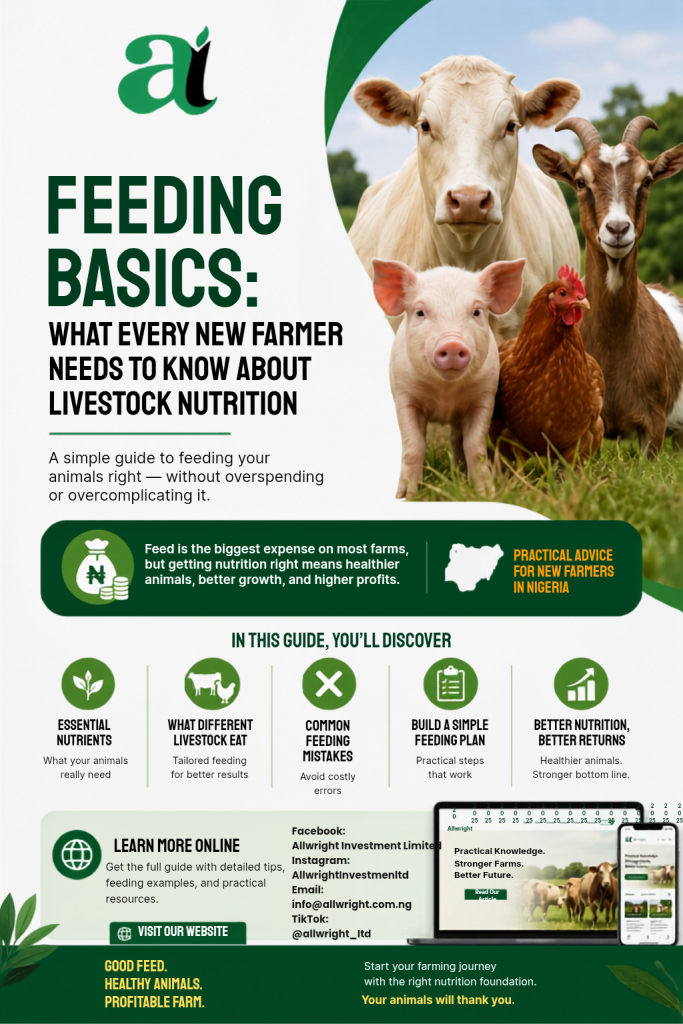
Feeding Basics: what every new farmer needs to know about Livestock Nutrition.
A beginner-friendly guide to feeding your animals right — without overspending or overcomplicating it.
Feed is the single biggest recurring expense on most livestock farms, often accounting for 60–70% of total production costs. Get it right, and your animals grow well, stay healthy, and turn a profit. Get it wrong, and you'll face stunted growth, poor weight gain, illness, or even death — all while spending money you can't get back.
For new farmers in Nigeria, understanding the basics of livestock nutrition isn't optional. It's the foundation everything else is built on. This guide breaks down what every beginner needs to know before they start feeding their first animals.
▪️ The Building Blocks of Animal Nutrition
Every animal — whether it's a goat, a chicken, or a cow, needs the same broad categories of nutrients, just in different proportions depending on species, age, and purpose.
Energy (Carbohydrates and Fats)
Energy is what fuels growth, movement, body warmth, and milk or egg production. Grains like maize, sorghum, and millet are common energy sources, along with cassava peels and other carbohydrate-rich feeds widely available across Nigeria.
Protein
Protein builds muscle, supports growth in young animals, and is essential for milk, egg, and meat production. Good protein sources include groundnut cake, soybean meal, cottonseed cake, and for poultry, fishmeal. Legume-based forages like Gliricidia and Leucaena leaves are also valuable, especially for ruminants.
Fiber
Fiber is critical for ruminants — cattle, goats, and sheep — because it keeps their digestive systems functioning properly. Pasture grass, hay, crop residues like maize stalks, and forage legumes all provide the fiber these animals need to digest food properly and stay healthy.
Vitamins and Minerals
Often overlooked by new farmers, vitamins and minerals are essential in small amounts. Calcium and phosphorus support bone development, salt supports basic body function, and trace minerals prevent deficiency diseases. Mineral licks, bone meal, and commercial mineral premixes are common ways to fill these gaps.
Water
Water isn't technically a "feed," but it's the most overlooked nutrient on most farms. Animals need constant access to clean water — without it, feed intake drops and so does growth and productivity. Dehydration can affect an animal's health faster than almost any feeding mistake.
▪️ What Different Livestock Actually Eat
Feeding isn't one-size-fits-all. Here's a quick breakdown by common livestock type :
Cattle and Goats (Ruminants)
These animals thrive on pasture, hay, and crop residues, supplemented with energy and protein feeds when needed — especially during dry season when grass is scarce. Goats are browsers and prefer leaves and shrubs over grass alone, so don't assume they'll eat exactly like cattle.
Poultry (Chickens)
Chickens need a more concentrated, balanced diet since they can't digest fiber well. Commercial poultry feed (starter, grower, and layer formulations) is formulated to match their life stage. If you're mixing your own feed, maize, soybean meal, fishmeal, and a vitamin-mineral premix are the typical base.
Pigs
Pigs are omnivores with high energy needs, especially during growth phases. Maize, cassava, and other energy sources combined with protein supplements like soybean meal or fishmeal form the foundation of a good pig diet. Pigs can also utilize kitchen waste and certain agricultural by-products, but balance is still key.
Sheep
Like goats, sheep are ruminants that do well on pasture and hay, with supplementation during lean seasons. They generally need less protein supplementation than goats but still benefit from mineral access year-round.
▪️ Common Feeding Mistakes New Farmers Make
Feeding the Same Thing Year-Round
Nutritional needs shift with the seasons, especially in regions with distinct dry and rainy seasons. Pasture quality drops significantly in the dry season, so farmers need a plan for supplementary feeding rather than assuming animals will "manage."
To help livestock make the most of available feed, farmers can also consider nutritional help supplements. One such product is Booster Promaxx by Allwright Investment Limited. This oral liquid preparation is specially formulated to maximize feed utilization, support healthy organ development, improve digestibility, and enhance nutrient absorption. It also contributes to improves meat and egg quality, helping farmers achieve better productivity and profitable.
Ignoring Age and Life Stage
A growing animal needs more protein than a mature one. A lactating or pregnant female needs more energy and calcium than one that isn't. Feeding everyone the same ration regardless of age or stage leads to poor growth in young stock and depletion in breeding females.
Skipping Minerals
Many beginner farmers focus entirely on energy and protein and forget minerals altogether. This can lead to weak bones, poor fertility, and slow growth — problems that are often misdiagnosed as disease when they're really nutritional gaps.
Sudden Feed Changes
Abruptly switching an animal's diet, especially for ruminants, can cause digestive upset. Any change in feed type or source should be introduced gradually over 7–10 days.
Overfeeding or Underfeeding
Both extremes cause problems. Overfeeding wastes money and can cause obesity or digestive issues, particularly in pigs and poultry. Underfeeding stunts growth and reduces productivity. Learning to estimate proper portions for your specific animals and life stages takes time, but it's worth getting right.
▪️ Building a Basic Feeding Plan
You don't need to be a nutrition expert to feed your animals well. Start with these steps:
- Know your animal's life stage— growing, mature, pregnant, lactating, or being fattened for market all have different needs.
- Use what's locally available— Nigeria's agricultural by-products (cassava peels, brewers' grains, groundnut cake, maize bran) are often cheaper and just as effective as commercial feed.
- Don't skip mineral seven a basic mineral lick or premix added to feed makes a measurable difference.
- Watch your animals body condition, coat quality, and growth rate tell you whether your feeding plan is working.
- Adjust with the seasons - plan ahead for dry-season feed gaps rather than scrambling when pasture runs out.
The Bottom Line
Good nutrition isn't about buying the most expensive feed — it's about understanding what your animals actually need and meeting that need consistently. That's where Allwright Investmen limited comes in, We provide quality livestock supplements and feed solutions designed to support healthier animals and improved farm productivity. Mean of the best feed ingredients for Nigerian farmers are available locally & internationally at affordable price. The key is not simply spending more on feed, but ensuring your animals receive the right nutrients at the right stage of life.
Get the basics right, and you'll see it in healthier animals, better growth rates, and a stronger bottom line.
Want to go deeper on managing your farm's finances? Read our guide on Understanding the True Cost of Raising Livestock for a full budget breakdown.